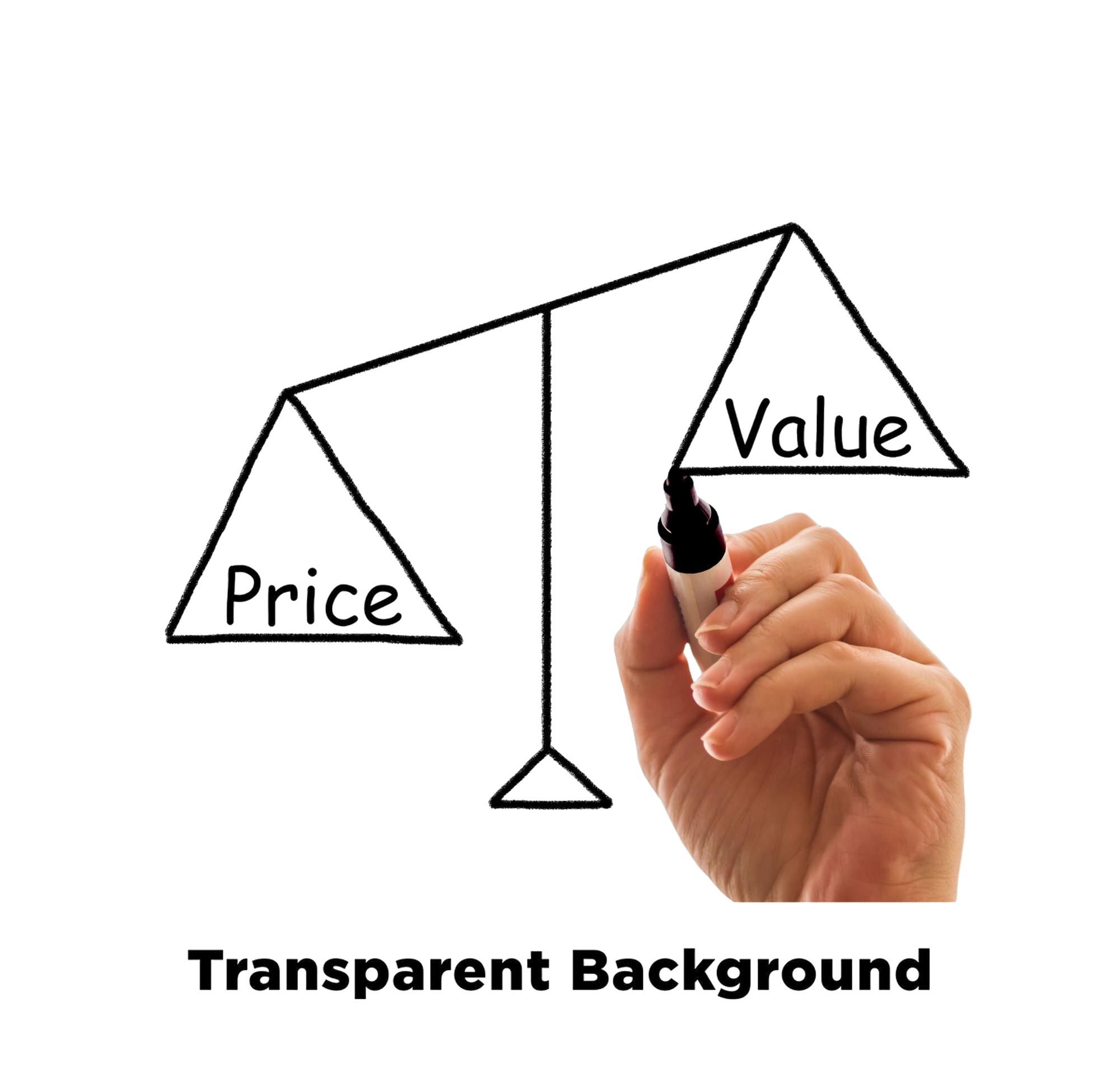

Efficiency is the most important factor in anything we do, any structure we build, and any process we carry forward. It is also frequently misunderstood. In business especially, people use the wrong metrics to measure it. We’ll come back to measurement. First, let’s look at what efficiency means in its simplest form and why it matters so much.
Put simply, efficiency means achieving the best possible result for your purpose with the least possible effort and resources. In a process that’s already underway, getting a better result with the same resources and effort also means improving efficiency.
Efficiency matters because it underpins scalability, sustainability, and health, all of which we’ve discussed since the beginning of this book as essential to success. The more efficient a business, a piece of work, or a process is, the more sustainable, scalable, and healthy it becomes. Other factors contribute too, but efficiency has the greatest impact.
That makes efficiency the most important concept in this book.
So why is efficiency still so hard to measure or fully understand? The answer is simple. Most entrepreneurs, artists, companies, and individuals skip the steps laid out in this book.
For one thing, managing resources takes an institutional mindset, even when you’re running a venture on your own. You have to separate your personal income from the income of the business and your own time from the time you set aside for the venture. Efficiency is fundamental even to time management. Most people struggle to draw that line. It takes the kind of clear distinction between individuals and institutions that we discussed earlier. It applies to Picasso and Pablo Diego just as it does to Elon Musk and SpaceX. Nvidia and Jensen Huang show us what can happen when that distinction breaks down.
The second consideration is time management. Time is the most basic yardstick for both effort and resources. Resources dwindle over time, and effort tends to taper off. We can leave the psychological and structural reasons aside. For most people, the biggest difficulty is using their time efficiently.
The third and most overlooked reason is that people struggle to distinguish between Purpose, Goals, and Dream in the way we discussed in earlier chapters. It seems like a simple distinction, yet it can change the outcome dramatically. Your Purpose, Dream, and Goals need to be clear and stay consistent. Efficiency is measured by comparing the best result you can achieve in service of your purpose with the resources and effort it takes to get there. If your purpose and goals are unclear, inconsistent, or weak, the measurement is flawed from the outset. That’s why stubbornness, consistency, and repetition matter.
To measure your efficiency, you need to answer four questions.
- What is my purpose, and what goals will get me there?
- What process am I running, or what work am I doing, to achieve that purpose or reach that goal?
- What share of my total capacity for effort does this process take, and what percentage of my available resources does it consume?
- How do the effort and resources I’m putting in compare with the ideal result I want to achieve?
If you can answer these questions clearly, you’re measuring your efficiency correctly.
As at the end of each chapter, let’s look at real-world examples of what happens when people get efficiency and its measurement right or wrong.
1. Those Who Achieved Their Purpose with Few Resources
WhatsApp and Instagram. In February 2014, when Facebook agreed to pay a total of $19 billion for WhatsApp, the company had 55 employees. Of those, 32 were engineers, and roughly 450 million people used the product each month. That worked out to about 14 million users per engineer. The marketing budget was zero. The founders had made it a principle from the start to keep the product free of advertising, and the total investment the company had received was less than one percent of the sale price. WhatsApp’s purpose fit into a single sentence. Get the message to the recipient reliably. Everything else was noise in the sense we discussed in the previous chapter, and the team kept it out.
Instagram is another version of the same story. When the acquisition was announced in April 2012, the company had 13 employees. A year earlier, it had four. It had around 30 million users and zero revenue. The announced price was $1 billion. After Facebook’s share price fell, the deal closed in September at $715 million. Network effects played a role in that valuation alongside efficiency. Still, the fact that it took so few people to keep that network running was no accident.
BİM. BİM started in 1995 with 21 stores and around 900 product lines. By the third quarter of 2026, it had reached 14,964 stores. In my view, the secret to that growth was its ability to make every new store a copy of the same narrow, repeatable formula. BİM carried a small range of products and sold them in high volumes. As the number of stores rose, complexity held steady. BİM kept replicating the same formula. What made efficiency so valuable here was what it allowed BİM to replicate across thousands of stores.
Costco. Costco’s story begins with a deliberate sacrifice. The company keeps its margins low. Its policy caps markups at about 14 percent on branded goods and 15 percent on its own Kirkland brand. Its gross margin hovers around 11 percent. The same logic applies to what goes on the shelves. According to Harvard Business School’s 1998 case notes, Costco carried around 4,000 items, compared with roughly 30,000 at a conventional supermarket. If you look at products one at a time, Costco seems “inefficient” because it earns so little on each one. Yet the company closed fiscal 2026 with $297.2 billion in sales and $5.9 billion in membership revenue. In 2025, membership fees were about $5.3 billion, roughly half of its $10.4 billion in operating profit. Costco earns its money through memberships, and its discipline on the shelves is what gives people a reason to pay for them. What looks inefficient at the product level is precisely what makes the system efficient as a whole. We’ll return to Costco when we look at measurement.
2. Those Who Had Plenty of Resources and Lost Sight of Their Purpose
Quibi. Quibi raised $1.75 billion and launched on April 6, 2020. About six months later, in October 2020, it announced that it was shutting down and returned roughly $350 million to investors. As Fortune summed it up, the company had paid for Hollywood-quality productions that very few people watched. The pandemic played a real part. A product designed to be watched on the go or during short breaks launched in a spring when people were staying home. There was more to the story, though. All that money rested on a single assumption. People would pay for short, high-budget content made exclusively for phones. Quibi spent its budget on a particular assumption about how to achieve its purpose. In the terms of our definition, the resources were immense and the result that served the purpose was close to zero.
Getir. In March 2022, a $768 million Series E round brought Getir’s valuation to $11.8 billion. Having created a category in Türkiye, the company expanded just as rapidly into the United Kingdom, Germany, the Netherlands, and the United States. In April 2024, it withdrew from all four markets. At the time, international markets accounted for about 7 percent of its revenue. According to PitchBook, Getir had raised about $2.4 billion in total. In February 2026, Uber agreed to buy Getir’s food and grocery businesses in Türkiye for up to $435 million. That price covers only those businesses, but set alongside the $11.8 billion valuation, it shows how much the scale of the operation had shrunk. Getir built a substantial business in Türkiye. Several factors shaped what happened, but in my view the problem arose when growth lost its connection to the results it was meant to deliver.
3. Those Who Counted the Right Thing
One of the oldest lessons in measuring efficiency comes from Taiichi Ohno at Toyota. Local efficiency asks how fully each machine is being used. Overall efficiency asks how little waste the system generates in producing the value people need. In Ohno’s view, producing more than is needed is the first form of waste. Use the wrong denominator, and the machine running at the highest utilization can generate the most waste.
Michigan Keystone ICU. The project ran in more than 100 intensive care units across Michigan and targeted catheter-related bloodstream infections. A team led by Peter Pronovost of Johns Hopkins created a checklist, measured infection rates, and changed hospital culture. The five steps on the list were basic precautions, starting with handwashing. All five were already known. The CDC had issued its first guidelines on the subject in 1991, yet rates barely changed throughout the 1990s, and people came to see these infections as inevitable. The change came when each unit could see its own rate and every team followed the same five steps every time. The target was clear (the infection rate), the process was clear (five steps), and it took very little (a checklist and a habit). Every unit could see how far it was from the ideal result.
In the first 18 months, infections fell by 66 percent statewide, more than 1,500 lives were saved, and costs fell by $200 million. Every dollar invested returned about $200. A later study found that deaths among older intensive care patients in Michigan fell by about 10 percent. The researchers made clear that the project alone couldn’t account for that decline. It’s another example that bears out the title of this book. Success came from repeatedly putting existing knowledge into practice and measuring the results.
Costco, a second look. The number Costco watches is whether its members come back. At the end of fiscal 2026, the renewal rate was 92.3 percent in the United States and Canada and 89.8 percent worldwide. Costco had 84.1 million paid members. Management reports the rate to the nearest basis point each quarter. In the final quarter, the U.S. and Canadian rate rose by 10 basis points. Costco’s leadership describes membership as the most important thing it sells. Its purpose is to “buy loyalty with low margins,” and it tracks the number that measures that purpose directly. The renewal rate tells Costco whether keeping margins low is working. Choosing a measure that tests the company’s claim about efficiency so directly from the outset shows a rare degree of clarity.
4. Those Who Counted the Wrong Thing
Facebook’s video watch time. In September 2016, Facebook acknowledged an error in the way it measured average video watch time. By excluding views shorter than three seconds, its formula overstated the average. According to what Publicis told The Wall Street Journal, the figure was inflated by 60 to 80 percent. The plaintiffs alleged an overstatement of 150 to 900 percent. In October 2019, Facebook settled the lawsuit for $40 million without admitting fault. The bigger issue was who made decisions based on that number. Publishers shifted toward video and built teams around it. Many of those that invested in video downsized in the years that followed. Vox Media’s cuts of around 5 percent in early 2018 are often cited as one example. The metric told publishers how long the viewers who made it into the calculation watched on average. The question they needed to answer was “How many people’s attention did we actually hold?” The denominator was wrong, and publishers allocated resources based on it.
Zillow Offers. On September 13, 2021, Zillow’s chief operating officer said Zillow Offers, its home-buying and resale business, could eventually reach more than 50 percent of the housing inventory. On October 18, the company announced that it would stop making new offers for the rest of the year. On November 2, it shut the service down altogether. In the third quarter, Zillow recorded a write-down of roughly $304 million because it had bought homes at prices above what it now expected to sell them for. It sold 3,032 homes that quarter, at an average gross loss of $80,771 per home sold. Total write-downs exceeded $540 million, and about 2,000 people, or 25 percent of the workforce, lost their jobs. CEO Rich Barton gave a clear reason. Home price forecasts were far more uncertain than the company had anticipated, and continuing to scale would create too much volatility in earnings and on the balance sheet.
From the outside, the growth plan was framed in terms of how many homes Zillow could buy. How much capital the forecasting error put at risk when multiplied by that volume only became clear once the losses started appearing on the books. Purchase volume measured how much work was being done. The size of the forecasting error determined how efficiently it was being done.
Putting the Stories Side by Side
The efficient organizations could state their purpose in a single sentence, and where they spent their resources followed from that sentence. The inefficient ones spent first and looked for the numbers afterward. What mattered in measurement was knowing what each number divided by what. Keystone used the infection rate as its denominator, and Costco used the renewal rate. Facebook’s average reflected only those who watched long enough to be counted. Zillow tracked growth through purchase volume, leaving forecasting error out of that measure.
Efficiency is the ratio of what you get to what you spend. Measuring it means putting the right things in the numerator and the denominator.