
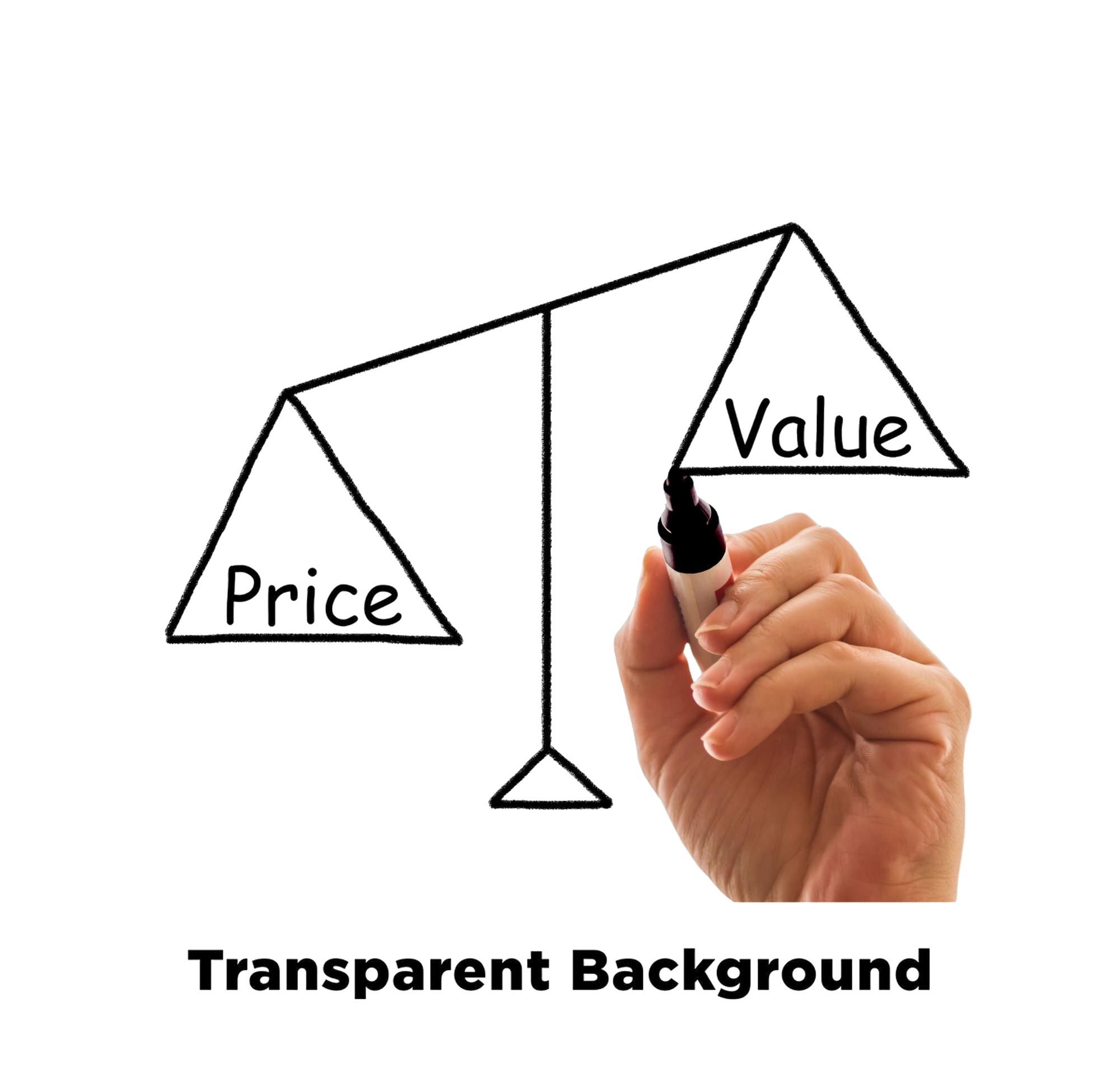
Making money is NOT one of humanity’s fundamental reasons for existing. Yet it is one of the modern human being’s fundamental reasons for existing. Long ago, in the name of civilization, we sacrificed our own skills, our instinct to survive and affirm our existence by grappling with the world—even our ability to do so—in exchange for comfort, ease, and accessibility. This pushed us to direct our labor toward securing the means to live through one another, rather than drawing those means from nature. The relationship between labor and abundance gave way to supply and demand.
This is interesting because the very evolution of human civilization is evidence of how readily most people can surrender their skills, capabilities, and, in fact, their freedom for the sake of ease and comfort—a testament, in a sense, to their own lazy self-indulgence. For a minority of humanity, meanwhile, it represents an extraordinary exercise in intelligence and self-interested sociological manipulation spanning the ages.
Still, a sociological analysis is unnecessary within the scope of this book. The outcome is that this evolution has left people sustaining their lives through one another’s demands, desires, and needs. Whereas labor was once the central element in surviving or living, earning money and working have now become the central elements. This has made earning money the necessary primary objective, whatever venture, line of business, or field you bring into existence.
But when it comes to sustainability and efficiency, there is another concept that goes beyond profit and often requires you to think about greater things in the long term, rather than immediate returns: value.
The moment humanity learned to sustain itself by supplying what others demanded and turned its civilization in that direction, something very interesting emerged at a socioeconomic level—something absent from earlier civilizations and, if you look closely, still absent from most communities whose civilizations have not taken this direction. This is relative value.
This concept is precisely why a painting Picasso made as a student could fail to find a buyer at the time and sell for millions of dollars today; why Burberry could burn its unsold products; why Jordans could become a teenage status symbol; why BlackBerry and iPhone could once embody an enduring rivalry between social classes; and why clothes bearing logos, cars priced like airplanes, and so much else can exist. If you have a product or a business, you make sales and earn money. This is as true for a painter as it is for an app, a car dealership, or a retail brand. Even when the dynamics and steps differ, the underlying nature remains the same. But if you create and offer value, you go beyond making sales. You have now become a commodity. You no longer need to say, “I have the best product,” to sell. You do not even need to sell at all.
Need arises from three fundamental things: time, lack, and convenience. Value, meanwhile, emerges from four fundamental things: desire; pleasure and comfort; power; and comparison. Your venture must appeal to one of these four and, if possible, relieve the unease or fill the void people feel in relation to it. That is when you create real value. A party organizer is someone people turn to as long as they want to have fun. An invitation-only pop-up event held once a month at a secret location, however, is something people desire. It appeals both to comparison and to pleasure and comfort. Shoes are a necessity; Jordans are a badge of status and lifestyle. Need is concrete; value is abstract. Need is objective; value is subjective.
This is precisely why value must be marketed, while a need only has to be met.
What is interesting is this: a need is easier to meet, and easier to lose. Value can be created through the right marketing and sociological or psychological manipulation even when none exists, because it consists entirely of people’s perceptions and how those perceptions are managed. Yet offering value is also what makes a brand, a business, or a person truly sustainable. If a venture—as rare as this may be—both meets a need and offers real value, while also making itself truly visible, it is a contender to become the most powerful brand in the world.
So, as always, what are the real-life examples?
First, let us look at those who put value before profit.
When Amazon went public in 1997, the best-known commitment in Jeff Bezos’s first letter to shareholders was this: investment decisions would be based on long-term market leadership rather than short-term profitability. The smallest, and perhaps boldest, demonstration of this was product reviews. Amazon allowed customers to leave negative reviews of products. Sellers objected, and their reasoning was simple: why would a company that made money from sales open the door to reviews that would reduce its own sales? Bezos’s answer in his 2003 letter was clear. Negative reviews cost some sales in the short term, but helping customers make better decisions paid off for the company in the long term. Amazon chose the trust its customers would place in it over the money it could earn that day. Trust is a form of value, and money always follows it.
There is a saying often described as Ferrari’s founding doctrine: always deliver one fewer car than the market demands. The company’s executives defend it to this day. They say that making customers wait allows them to dream about the car, and that those who wait enjoy it more. The numbers support this, too. In 2025, Ferrari delivered 13,640 vehicles, compared with 13,752 the previous year. Deliveries fell slightly, yet revenue and profit rose. Approximately 84 percent of its customers already own at least one Ferrari, and some models are sold by invitation only. It would be unfair to say that Ferrari sells cars. What it essentially sells is the right to buy. Desire, power, and comparison are all hidden in that waiting list.
In 2019, Taylor Swift’s first record label sold the master recordings of her first six albums to Scooter Braun, and Swift lost ownership of her own songs. Swift responded not by fighting, but by rerecording her albums from scratch and releasing them again as “Taylor’s Version.” At first glance, the move made no economic sense, because she had to persuade listeners to listen to the same songs again. Yet this was a value proposition built on ownership and trust, and it paid off handsomely. 1989 (Taylor’s Version) sold 1.65 million equivalent units in its first week, surpassing the original’s first-week figure by 28 percent. The Eras Tour exceeded $2 billion across 149 shows. On May 30, 2025, Swift announced that she had bought back the masters of her first six albums, writing that her fans’ support for these two moves had made it possible. Value came first; money followed. That money then went back into reclaiming ownership of the value.
But value does not always arise from genuine superiority. Often, it arises from the construction of meaning, and that construction is far more powerful than people imagine.
When De Beers hired the American advertising agency N.W. Ayer in 1938, approximately one in ten American brides wore a diamond ring. In 1947, the slogan “A Diamond Is Forever” was born, followed by the “two months’ salary” rule. No tradition had prescribed such a measure, but repetition made it begin to function as a social norm. Within approximately forty years, nearly 80 percent of American brides were wearing diamond rings. The same game was played even more starkly in Japan: fewer than 5 percent of brides received diamond rings in 1967, but by 1981 the figure had risen to approximately 60 percent. The diamond had not changed; the meaning attached to it had. Power, comparison, and the idea of “loving enough” were woven around a stone and became a society’s habit.
In 2019, Maurizio Cattelan sold a banana taped to a wall under the title Comedian, in three editions, for between $120,000 and $150,000. In November 2024, one of these works went to auction at Sotheby’s with an estimate of $1 million to $1.5 million. After a bidding contest lasting just a few minutes, it sold to crypto entrepreneur Justin Sun for $6.24 million, including fees. What Sun received was a banana, a piece of tape, a certificate of authenticity, and instructions explaining how to replace the banana if it rotted. After the sale, he said he would eat the banana. In tangible terms, there is nothing here but an edible piece of fruit. The value lies entirely in the narrative, the debate, and the comparison inherent in “being the person who bought that banana.” It is difficult to find an example that lays bare the subjectivity of value more clearly.
On December 12, 2016, dozens of influencers, including Kendall Jenner—400, according to the investor presentation—simultaneously posted a solid orange square on Instagram. Reports stated that Jenner received $250,000 for a single post. There was no functioning festival yet, but the desire to “be there” and the impulse to compare were enough to sell tickets. Those who arrived on Great Exuma in the Bahamas in April 2017 were greeted by disaster relief tents pitched on a gravel lot and insufficient water. The investor presentation had targeted 40,000 ticket sales; approximately 8,000 had been sold by the time the festival arrived. Fyre Festival showed that perception could conceal the absence of a festival for months. But without real value, that perception could not sustain even the first weekend.
When value is never created, or is created but cannot be made visible, the picture is entirely different.
Juicero raised approximately $120 million in investment and began selling a “smart” juicer for $699 in 2016. The machine worked only with the company’s own packs. In January 2017, the price was reduced to $399. In April 2017, Bloomberg demonstrated that the packs could also be squeezed by hand. According to the reported test, hand-squeezing produced 212 grams of liquid in a minute and a half, while the machine produced 227 grams in two minutes. The company shut down in September 2017. There had been no need in the first place, because squeezing juice was easy. The value, meanwhile, consisted solely of a claim that the machine was necessary, and that claim collapsed with a single video.
In 1973, Xerox’s Palo Alto Research Center had a computer called the Alto that used a mouse, windows, and a network connection. In December 1979, Steve Jobs and the Apple team visited PARC as part of an arrangement made in exchange for Xerox investing in Apple. The Mac and Lisa projects had already begun before that visit, and Apple added a great deal to the idea. The story that Apple “stole it” is therefore a heavily oversimplified account. Xerox brought these ideas to market in 1981 under the name Star. The Star was very expensive, failed to find a market, and was discontinued in 1985. In 1984, Apple brought the same ideas to the masses with the Macintosh, priced at approximately $2,500. Xerox created the value; someone else priced it, showed it, and explained it.
Nick Drake made three albums between 1969 and 1972: Five Leaves Left, Bryter Layter, and Pink Moon. Each is reported to have sold five thousand copies or fewer during his lifetime. He avoided performing live and struggled to promote his music. He died in 1974 at the age of 26. Approximately twenty-five years later, Volkswagen used Pink Moon in its “Milky Way” commercial. In the first ten weeks of 2000, the album sold more than 4,700 copies, compared with 815 in the same period the previous year. The music had not changed; it had simply been heard for the first time. The value had been there from the beginning. What was missing was a link that would put it in front of people.
Juicero had neither value nor visibility. Fyre had visibility but no value. Xerox and Drake had value but no visibility. The three stories say the same thing: meeting a need makes you a seller; value makes you sought after. But to remain sought after, you must bring both together under the same roof.
The visibility of those without value fades; the value of those without visibility falls silent. Sustainability often comes from value.