
In boardrooms and C-level meetings, the most popular agenda item over the last two years has been clear: "Where do we stand in the AI revolution?" Founders and CMOs are approving massive budgets for next-generation AI tools, lured by the promise of multiplying operational speed and dramatically reducing costs. Yet, months later, when reviewing financial statements or operational outputs, the same question echoes: "Where is this massive efficiency?"
The core problem here lies not in the capabilities of artificial intelligence or the technology itself, but in how organizations position it. Buying a software license and distributing passwords to employees is an entirely different discipline from making that tool an indispensable, profit-generating part of the daily workflow. Just as buying an annual gym membership doesn't build muscle, merely securing "access" to technology doesn't generate growth. The point where decision-makers confuse the presence of capability with the execution of strategy is one of the most critical breaking points in growth engineering.
The Great Fallacy: "We Have Transitioned to AI"
Traditional business environments and the agency ecosystem tend to believe that tools are synonymous with solutions. Many agencies or departments claim to run "AI-powered" processes, when in reality, they are merely sprinkling an AI tool like makeup over their outdated, clunky operations.
If a marketing team generates content in seconds using AI, but getting that content published still takes three days of cross-departmental email traffic, AI hasn't accelerated your operation. It has simply relocated the bottleneck. Tools alone do not generate ROI; what generates ROI is the system built around that tool.
The Deployment vs. Execution Matrix
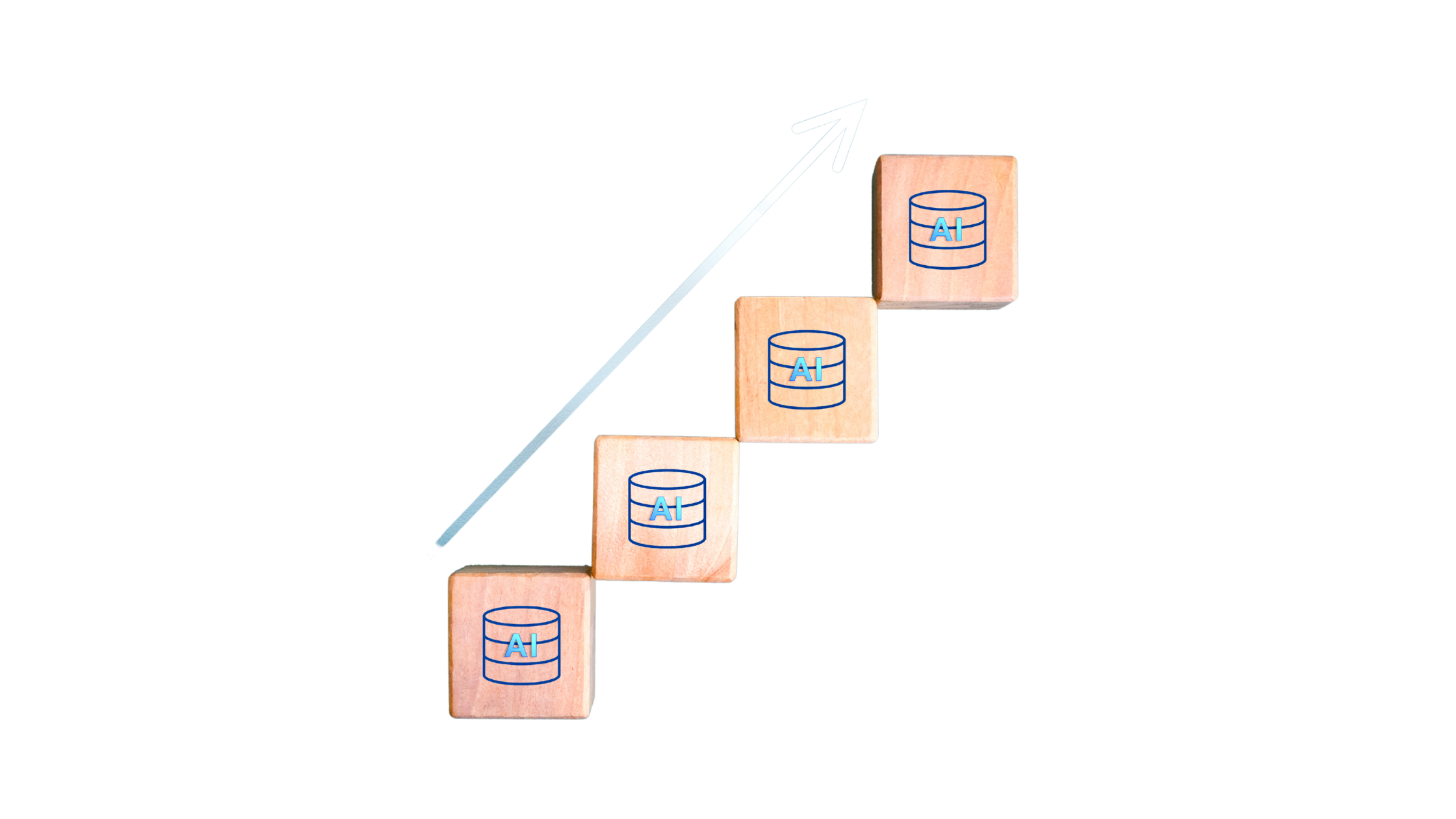
To map out a genuine operational transformation, we must draw clear boundaries across the process. We read this distinction through the Deployment and Execution Matrix:
- Stage 1 - Deployment (Installation and Illusion): This is the easiest stage because it only requires capital. The budget is approved, and enterprise licenses are acquired. Many companies mistake this for "digital transformation." In reality, this is the purchase of potential, not output.
- Stage 2 - The Friction Zone: This is the gray area where teams attempting to use the tool clash with entrenched habits. The company has bought the software, but the workflows have not been redesigned for this new velocity. This is where investments go to waste and excuses like "This AI just isn't suited for our industry" are born.
- Stage 3 - Execution (Systematic Output): The stage where AI fundamentally alters how work is done. It is no longer about "doing a task faster," but about "eliminating unnecessary steps entirely." The metrics are no longer "number of user logins," but rather a drop in customer acquisition costs, operational speed, and pure profitability.
Growth Engineering: The System Governs the Tool
Our positioning at Sellf as a "growth partner, not an agency" is rooted exactly in this reality. In our philosophy, growth is an engineering job—far too serious to be left to chance or mere technological acquisitions. Sustainability, scalability, and efficiency are achieved not through flashy presentations, but through robust systems built on the ground.
Whether managing our own companies like Clivnus, Otopart, and VARU, or working with global and national partners like LVMH, Philips, and Muratbey, our approach remains constant: The existence of a tool does not mean it is being used, and its usage does not mean it is producing results. That is why we don't just offer our clients a tool or a "service"; we engineer the workflows that integrate the tool into the organization's spine.
This is exactly why we reject the agency ecosystem's easily manipulated, empty vanity metrics like impressions, clicks, or "ROAS." The RGI (Return on Growth Investment) methodology we developed exists to dismantle the "deployment" illusion and measure the pure profitability generated by "execution." RGI examines how the money spent on technology creates financial and operational momentum in the company's core business model.
Facing Reality
If the next-generation tools you are funding aren't creating a radical shift in how you operate, you are merely financing a more expensive status quo.
So, as a C-level decision-maker, what are you paying for right now: the execution of a real system, or the illusion of deploying technology?