In this final section of the Development step, we need to talk about something that acts as a multiplier for everything else: continuous learning and monitoring. This is a constant requirement — one that applies equally to organizations and to individuals. So what does it actually mean?
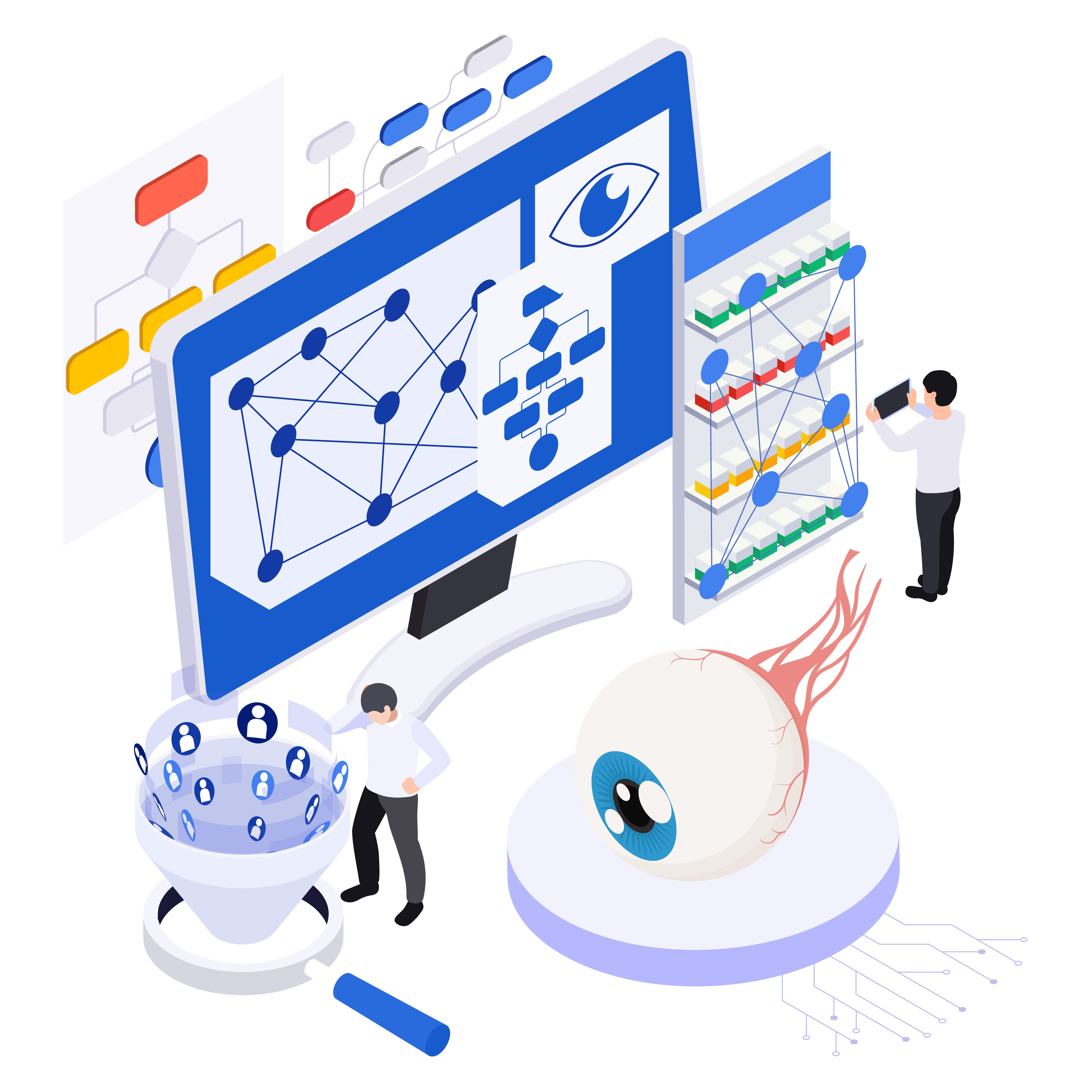
Continuous Monitoring and Learning (let's call it CML from here on) is a concept best understood from two angles. Continuous Monitoring is keeping an eye on your sphere of influence and staying aware of what's changing. No matter how busy we are, or how far we've progressed, we should never let complacency or fatigue talk us out of it. A company should always be watching its own industry; an entrepreneur or executive should always be watching similar profiles and their sector.
At the end of the day, this is one of the most effective concepts there is — it's what brings well-timed countermeasures, drives well-timed moves, and even prevents mistakes or stumbles before they happen. Regular Monitoring keeps you aware of your competitors, lets you see the same mistakes you yourself could make when someone else makes them first — and analyze them causally — and lets you read new trends and demands early, at the right time. Essentially, it means learning through others: seeing others' mistakes, needs, and obstacles, working through them, and moving ahead of them as a result.
Regular Learning, on the other hand, is really more about individuals than organizations. The one place it maps onto organizations is through the need to correct operational mistakes and inefficiency — a concept we'll explain in more detail further on. But as a concept, regular learning may well be one of the most important ideas in the entire Development step.
So why is regular learning so important?
Regular Learning also means a person or an organization consistently developing themselves. Life keeps developing — in every field, different individuals or institutions are constantly producing new additions, concepts, methodologies, or case studies. Simply keeping track of and perceiving these isn't enough; the real goal should always be to learn from genuine sources of information and from what actually happens.
In a way, this ties back to the concept of perception we discussed in the previous section. If, when you make a mistake, or when someone puts forward an idea that disproves your own, or in negative situations generally, your response is to complain and feel sorry for yourself instead of examining it, learning from it, and developing yourself — you won't be doing this right. But if you approach it with the right mindset and the right perception, absorbing information that's relevant to your purpose — and it's an important detail that it has to be relevant to your purpose and your field — and learning continuously, you can be sure that sooner or later you'll be a few steps ahead of your competitors, or of anyone running the same race as you.
So read case studies, study industry trends, learn about topics you don't know, and if you're ever caught off guard by a question — even if it's too late to matter in the moment — go find the answer and absorb it. Learning, independent of success, is a process that should never end. And when you channel it toward your purpose, your focus, and your goals, your expertise and your growth will expand with a snowball effect.
But don't skim past the exclamation point in that last sentence. As with every concept here, when learning is accumulated in a scattered, aimless, and unorganized way, it creates clutter. Always equip yourself with information that fits your purpose, your sphere of influence, and your needs. Learning just for the sake of knowing is like filling a building's foundation with sand instead of concrete: it will never be solid, and nothing you try to build on it will ever rise as high as you want.
So this doesn't stay purely theoretical, let's look at four examples — three confirm the principle, and one shows the cost of violating it.
Let's start with Kodak, because it's the most painful exception to CML. In 1975, Kodak engineer Steve Sasson built the world's first digital camera. The company didn't even ignore it — its own internal research in 1981 accurately predicted when digital would overtake film. So Monitoring was flawless; Kodak was watching its industry, and it saw the future coming. But Learning never happened — the knowledge that was seen never translated into organizational behavior, because protecting the film business was more comfortable in the short term. The result: one of the best-informed companies in the world became a victim of its own invention. This teaches us something important — if Monitoring never turns into Learning, it's just a log of awareness. It changes nothing.
Nvidia's story shows the exact opposite. When Jensen Huang and his team noticed researchers using gaming cards for unrelated computing tasks, instead of ignoring it, they embraced it and steered the company toward powering artificial intelligence — that's pure Monitoring, reading an early signal from the environment. But the real difference lies in the Learning: they released CUDA in 2006, and when GPUs powered AlexNet in 2012, they redirected the company toward the AI era once again — meaning they patiently learned that field for years before seeing the payoff, and embedded it into the system. Today's Nvidia is the product of that years-long, purpose-driven learning.
Netflix is an example of a similar discipline. Its move to online streaming in 2007, and its step into original content production with House of Cards in 2013, fundamentally changed how millions of people consume media. What's critical here is this: each time, Netflix put its own current, successful business model — first DVD rental, then licensed content — at risk in order to move to the next stage. This is regular monitoring paired with courage: observing not your competitors, but your own future, and moving early.
LEGO, meanwhile, is the clearest example of the corporate side of Learning — that is, the dimension of "learning from operational mistakes." When they came to the brink of bankruptcy in 2003–2004, new CEO Jørgen Vig Knudstorp launched a detailed financial and operational review, and it turned out nobody actually knew which of the company's products were even profitable. It was a painful but honest learning process — they saw the price of scattered, unfocused growth, cut their product count from 13,000 down to 7,000, and returned to their core. This maps directly onto the warning in the text above: when learning is accumulated without purpose, it creates clutter — that was exactly LEGO's crisis, and its recovery was cleaning up that clutter and channeling learning back toward its core.
This principle carries just as much weight for individuals as it does for organizations, of course — and sometimes it shows up in its rawest form precisely in individuals.
Warren Buffett's story is Regular Learning in almost its purest form. When students asked Buffett how to prepare for a career in investing, he reportedly told them to read 500 pages a day: "That's how knowledge works. It builds up, like compound interest" — and he didn't treat this as a slogan but as a discipline he genuinely lived by, reportedly spending around 80% of his day reading. The critical point is this: that reading isn't aimless curiosity — it's a learning routine channeled directly into the quality of his investment decisions. In other words, the text's warning that learning "has to be relevant to your purpose" has a direct, literal counterpart in the daily practice of the world's most successful investor.
LeBron James, meanwhile, is Continuous Monitoring and Regular Learning applied to the body — the most concrete domain there is. The fact that he can still play at an elite level at 39 is no accident — he reportedly invests around $1.5 million a year in a recovery and maintenance system that combines percussion therapy, cryotherapy, hyperbaric oxygen, and precision nutrition. The real lesson here isn't the money spent, it's the logic: he continuously monitors his own body (Monitoring), reads where wear and tear is starting each season, and updates his routine accordingly (Learning). He isn't training harder than other players — he's recovering better, and that turns years of accumulated wear into compounding growth instead. This is the individual counterpart of the book's central thesis: an edge over competitors doesn't come from working harder, it comes from monitoring yourself more accurately and embedding what you learn into the system.
To sum up: the world moves forward whether you do or not. Whether you hold on and move with it, or get stuck in the mud and fall behind, is up to you — up to your capacity for Continuous Monitoring. And how big your steps will be, and how high your horizon will reach, depends on how thoroughly you apply the principle of Continuous Learning.